How to Store Frozen Food Properly at Home
29 October 2026 · 4 min read
How to Store Frozen Food Properly at Home
Frozen food makes everyday cooking easier. Whether you enjoy chicken nuggets, seekh kebabs, samosas, chicken rolls, or other frozen snacks, proper storage helps maintain food quality and safety.
With a few simple habits, you can organise your freezer, reduce food waste, and keep your favourite snacks ready for your next meal.
1. Keep Your Freezer at the Right Temperature
For safe long-term frozen food storage, your freezer should maintain a temperature of -18°C (0°F) or below.
Use a freezer thermometer if possible to check that the temperature remains consistent. Avoid leaving the freezer door open for long periods, as this can allow warm air to enter.
2. Store Frozen Food Promptly
Place frozen food in the freezer as soon as possible after bringing it home. If you purchase frozen products, use an insulated bag for the journey when needed, especially during hot weather.
Do not leave frozen food at room temperature for extended periods. If a product has thawed, follow food-safety guidance before deciding whether it can be safely refrozen.
3. Keep Products in Their Original Packaging
Original packaging often contains useful information, including ingredients, storage instructions, cooking directions, and best-before dates.
Keep the packaging intact whenever possible. If you need to transfer a product into another suitable freezer container, label it with the product name and storage date.
Always follow the manufacturer's specific storage instructions.
4. Organise Your Freezer Properly
A well-organised freezer makes it easier to find what you need and helps prevent products from being forgotten.
Consider these simple habits:
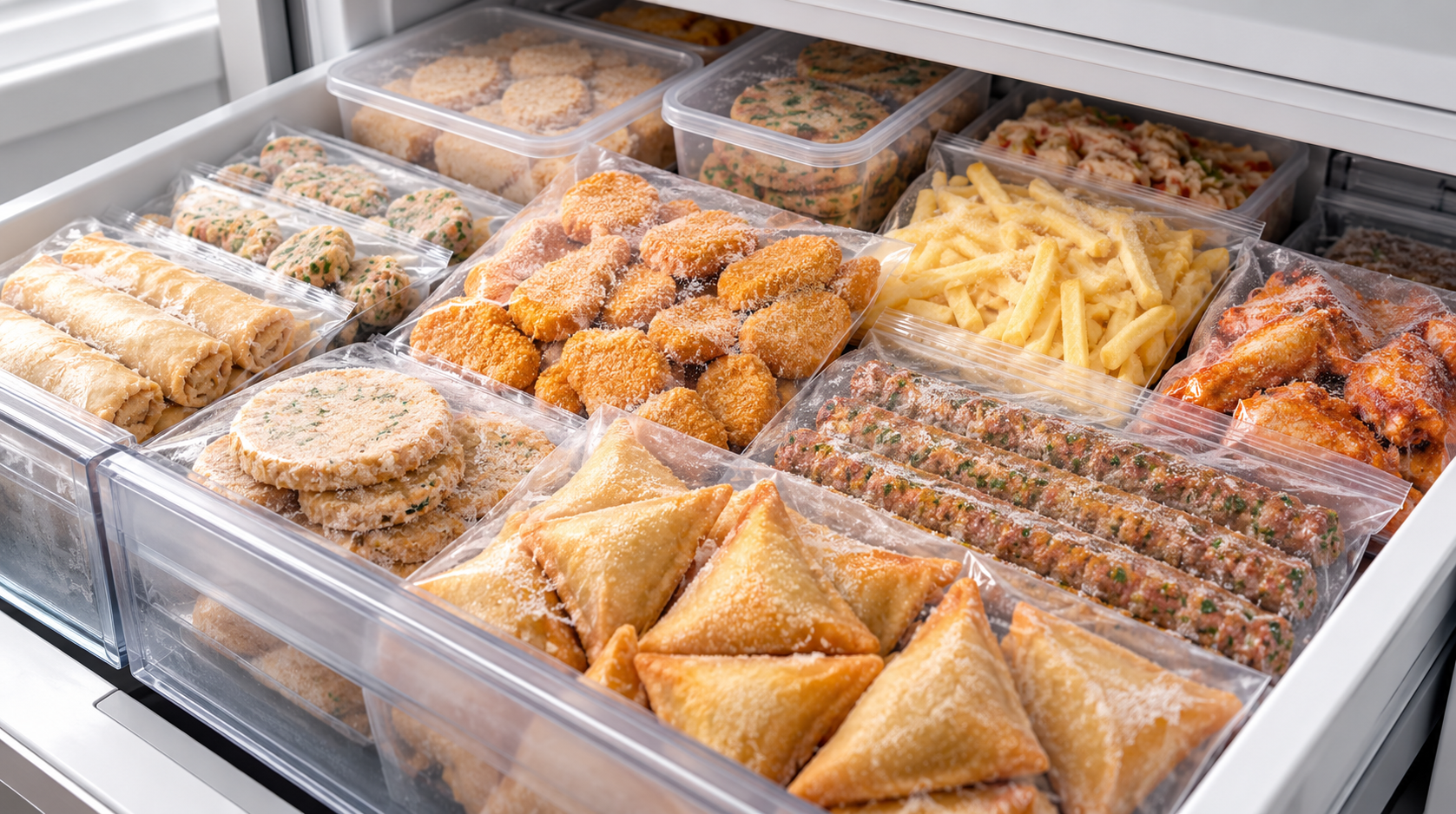
- Group similar items together, such as kebabs, nuggets, samosas, and fries. - Keep older products accessible so you can use them first. - Label opened packages with the date. - Avoid overfilling the freezer to the point that air cannot circulate. - Keep raw and ready-to-eat foods separated to prevent cross-contamination.
5. Prevent Freezer Burn
Freezer burn can occur when food loses moisture during frozen storage. It may affect the product's texture and flavour.
To help reduce freezer burn, keep packages properly sealed, minimise exposure to air, and maintain a consistent freezer temperature.
Use suitable airtight freezer bags or containers when repackaging is necessary. However, always follow the original product's packaging instructions.
6. Thaw Frozen Food Safely
The safest general method for thawing many frozen foods is to place them in the refrigerator. Keep the product covered and separate from ready-to-eat foods.
Some frozen snacks are designed to be cooked directly from frozen, so thawing may not be necessary. Check the product's cooking instructions before preparing it.
Never thaw frozen food on the kitchen counter for extended periods.
7. Follow Cooking Instructions Carefully
Different frozen foods require different preparation methods. Nuggets, samosas, kebabs, rolls, and other products may have different cooking times and temperature requirements.
Follow the manufacturer's instructions and ensure that food is thoroughly cooked. Chicken products should reach an internal temperature of 74°C (165°F) for food safety.
Do not rely on the outside colour alone to determine whether chicken is fully cooked.
8. Check Dates and Storage Guidance
Frozen food can retain its quality for different lengths of time depending on the product, packaging, and storage conditions.
Check the label for any recommended storage period and use-by or best-before information. Do not assume every frozen product has the same storage life.
If a product has been stored incorrectly or its safety is uncertain, do not taste it to determine whether it is safe.
Make Everyday Meals Easier with Chicken Chill Bite
Keeping frozen snacks available at home can make busy evenings, family gatherings, and tea-time preparations more convenient.
Explore the Chicken Chill Bite collection for frozen food options, including kebabs, nuggets, samosas, and other snacks. Check each product's packaging for its storage and cooking instructions so you can prepare it properly at home.
Ready to stock your freezer? Visit Chicken Chill Bite to browse the available products and deals.
Frequently Asked Questions
What temperature should a freezer be?
A freezer should generally be maintained at -18°C (0°F) or below for long-term frozen food storage.
Can frozen snacks be cooked without thawing?
Some products can be cooked directly from frozen, while others may require thawing. Always follow the instructions on the packaging.
How can I prevent freezer burn?
Keep food properly sealed, reduce exposure to air, and maintain a consistent freezer temperature.
Is it safe to refreeze thawed food?
It depends on how the food was thawed and how long it remained at what temperature. Follow recognised food-safety guidance and the manufacturer's instructions.
How should frozen chicken products be cooked?
Follow the product-specific cooking directions and ensure the internal temperature reaches 74°C (165°F).
Proper storage helps you enjoy convenient frozen food while maintaining good food-safety practices. Make freezer organisation part of your routine with Chicken Chill Bite!